Choosing China’s top laser hair removal for dark skin requires more than comparing prices or marketing claims. It requires careful attention to wavelength, clinical experience, device quality, and aftercare. Darker skin contains more melanin, so poorly selected settings may cause burns, irritation, or temporary pigmentation changes. The safest approach starts with a trained professional who understands different skin tones.
So, how does laser hair removal work on dark skin? A laser sends controlled light into the hair follicle, where pigment absorbs the energy and creates heat. This heat weakens future hair growth while protecting the surrounding skin as much as possible. For many darker skin types, long-pulsed Nd:YAG lasers at 1064 nanometers are often considered suitable because they reach the follicle with less surface melanin absorption. However, the wavelength alone does not guarantee safety.
A responsible clinic should complete a skin assessment, review medical history, and perform a patch test before full treatment. Cooling systems, clean equipment, eye protection, and carefully adjusted energy levels also matter. Look for qualified operators, documented device maintenance, transparent treatment plans, and realistic explanations of possible side effects. Results usually require several sessions because hair grows in cycles. Some areas respond slowly.
No device is perfect. Hormones, hair thickness, skin sensitivity, and aftercare can change the outcome. Even experienced providers may need to adjust settings between visits. This guide explores how professional clinics in China approach laser hair removal for dark skin, helping readers make safer, better-informed decisions.
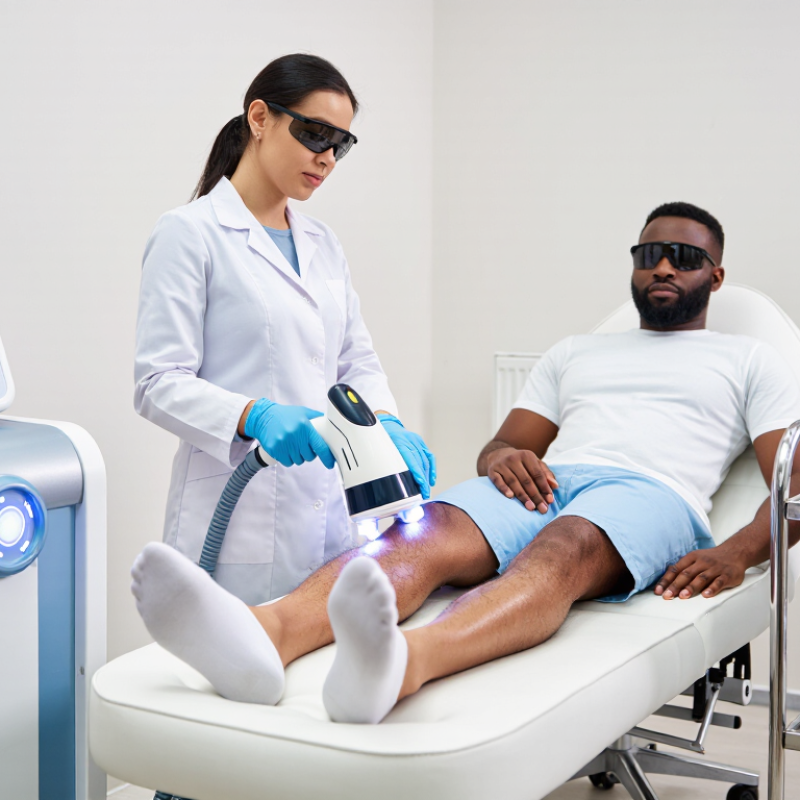
Laser hair removal can suit dark skin when the wavelength targets pigment deep in the follicle, rather than mainly heating surface melanin. Dark skin contains more melanin, so older devices may increase the risk of burns or uneven lightening. A long-pulsed 1064 nm Nd:YAG laser is often selected because it penetrates deeper with less absorption by epidermal pigment. It is not automatically risk-free. Settings matter greatly.
A qualified practitioner should assess skin tone, hair thickness, recent tanning, medications, and healing history. A small patch test should be completed before treating a larger area. Cooling gel or a chilled tip can reduce surface heat. The room should feel controlled, not rushed. During treatment, brief warmth and snapping sensations are common. Severe pain is a warning sign. Dark, coarse hair often responds better than fine, pale hair because the laser needs pigment to absorb energy. Several sessions are usually needed because hair grows in cycles.
Aftercare also protects the skin. Avoid intense sun, tanning products, hot baths, and harsh exfoliation for the period advised by a clinician. Use broad-spectrum sunscreen on exposed areas. Temporary redness may occur, but blistering, lasting swelling, or unusual light and dark patches need medical review. Results vary, and no honest provider can promise complete permanent hair removal. The process is not perfect. Careful assessment may feel slower, but it reduces avoidable risks.
| Evaluation Dimension | Evidence-Based Information | Practical Considerations for Dark Skin |
|---|---|---|
| Basic Mechanism | Laser hair removal uses selective photothermolysis: light is absorbed by melanin in the hair shaft and follicle, converted into heat, and used to damage the follicle’s growth structures. | The treatment must create enough heat in the follicle while limiting heat absorbed by melanin in the surrounding skin. |
| Skin-Tone Assessment | Fitzpatrick skin types V and VI generally contain more epidermal melanin and have a higher risk of pigment changes after excessive heating. | A qualified clinician should assess both natural skin tone and recent tanning before selecting settings and treatment timing. |
| Commonly Preferred Wavelength | The long-pulsed 1064 nm Nd:YAG laser is commonly preferred for deeply pigmented or darker skin because its longer wavelength penetrates deeper and is absorbed less by epidermal melanin than shorter wavelengths. | Lower epidermal absorption can improve the safety margin, but it does not eliminate the risk of burns or temporary pigment changes. |
| Alexandrite and Diode Lasers | 755 nm Alexandrite and approximately 810 nm diode lasers can be effective in selected skin types, but they are more strongly absorbed by epidermal melanin than 1064 nm Nd:YAG. | For darker skin, device selection and conservative parameters should be determined by an experienced medical professional rather than by wavelength alone. |
| Hair Color and Thickness | Dark, coarse hair usually responds better because it contains more melanin and absorbs more laser energy. Blonde, gray, white, and some red hairs respond poorly because they contain little or no target pigment. | Results may vary across body areas because hair density, thickness, and growth cycle are not uniform. |
| Expected Treatment Course | Multiple sessions are required because lasers work best during the active anagen phase of hair growth. Many patients need approximately 6–8 sessions, although the number varies by area, hair type, hormones, and device settings. | Maintenance treatments may be needed because laser treatment reduces hair growth but does not guarantee permanent removal of every hair. |
| Treatment Interval | Sessions are commonly spaced about 4–8 weeks apart, depending on the body area and the patient’s hair-growth cycle. | Scheduling too frequently may treat fewer hairs in the active growth phase and may increase unnecessary skin irritation. |
| Cooling Technology | Integrated cooling, such as contact cooling, chilled air, or a cooling spray, helps reduce discomfort and protects the epidermis during treatment. | Cooling supports safety but cannot compensate for unsuitable fluence, pulse duration, or inadequate clinical assessment. |
| Patch Test | A small test area can help evaluate the skin’s response to the chosen wavelength and treatment parameters before a larger area is treated. | For darker skin, a patch test is especially useful for checking excessive redness, blistering, burns, or delayed hyperpigmentation. |
| Pre-Treatment Preparation | Avoid tanning and artificial tanning before treatment, and do not wax or pluck the hair immediately beforehand because the follicle is needed as the laser target. Shaving is commonly permitted. | Tell the clinician about recent sun exposure, photosensitizing medicines, active skin conditions, and a history of abnormal scarring or pigment changes. |
| Typical Short-Term Effects | Mild redness, swelling around hair follicles, warmth, and temporary sensitivity can occur and often settle within hours to a few days. | Persistent pain, blistering, significant swelling, or worsening discoloration requires prompt medical evaluation. |
| Pigment-Change Risk | Post-inflammatory hyperpigmentation or hypopigmentation can occur after laser treatment, with greater concern in darker skin or recently tanned skin. | Sun protection, appropriate energy settings, adequate cooling, and experienced supervision help reduce risk; pigment changes may take weeks or months to resolve. |
| Sun Protection | Broad-spectrum sunscreen and protection from direct ultraviolet exposure are important before and after treatment because ultraviolet exposure can increase irritation and pigmentary complications. | Follow the clinic’s specific instructions, avoid tanning during the treatment course, and protect treated areas with clothing or sunscreen. |
| Areas Commonly Treated | Common areas include the face, underarms, bikini line, legs, arms, chest, and back. | Facial hair may be more hormonally influenced and can require more maintenance than hair on many body areas. |
| Important Limitations | Laser hair removal is not equally effective for all hair colors, does not remove every hair permanently, and may be less predictable when hormonal conditions promote new growth. | A consultation should include realistic expectations, a review of medical history, and a personalized treatment plan. |
| Safety Standard | Laser hair removal should be performed by a trained and appropriately supervised professional using a device cleared or approved for the intended use and skin type in the relevant region. | Device settings should be individualized; darker skin should not be treated using a universal preset or an untested energy level. |
A long-pulsed 1064 nm wavelength can reach the follicle with less surface pigment absorption. Dark skin still needs careful settings. It is not risk-free.
A qualified practitioner should assess your skin tone, hair thickness, tanning, medications, and healing history. A small patch test should come first. Do not skip it.
Avoid tanning, self-tanners, and strong sun exposure for at least two weeks. Shave the area about 24 hours before treatment. Arrive with clean skin. Remove lotions, makeup, and deodorant.
Avoid waxing, tweezing, and epilators before treatment. The laser needs the hair root as a target. Shaving is usually more suitable.
Brief warmth and snapping sensations are common. Cooling gel or a chilled tip may reduce surface heat. Severe pain is a warning sign.
Several sessions are usually needed because hair grows in different cycles. Dark, coarse hair often responds better than fine, pale hair. Results vary between people.
Use a cool, clean compress for several minutes. Apply a fragrance-free moisturizer. Avoid scrubs, acids, and retinoids for a few days. Keep the area away from hot baths and intense exercise.
Avoid strong sun and tanning products during the advised recovery period. Use broad-spectrum SPF 30 or higher on exposed skin. Reapply sunscreen outdoors. Small habits matter.
Mild redness or warmth can resemble tiny sunburn patches. Blistering, severe pain, lasting swelling, or unusual darkening needs medical review. Do not pull shedding hairs from the root.
No honest provider can promise complete permanent hair removal. Hair may shed after one to three weeks. Settings may need adjustment between sessions. The process is not perfect.
Laser hair removal can be suitable for dark skin when the treatment is carefully selected and professionally controlled. The process uses concentrated light energy to target melanin in the hair follicle, heating it enough to reduce future hair growth while protecting the surrounding skin. For darker skin tones, advanced wavelengths with deeper penetration and adjustable energy levels are often preferred because they can distinguish hair from the skin more safely. Understanding how does laser hair removal work on dark skin helps explain why proper settings, cooling, and a qualified technician are essential.
During treatment, the skin is cleansed, protected, and exposed to short light pulses that may feel like mild snapping or warmth. Before a session, avoid tanning, waxing, and irritating skincare products, while shaving the area as advised. Afterward, use gentle skincare, avoid excessive heat and sun exposure, and apply broad-spectrum sunscreen. Several sessions are usually needed because hair grows in different cycles, and results vary according to hair color, thickness, and individual skin response.

 Monae Beauty