How Many Sessions for Full Tattoo Removal?

Time:2026-10-08 Author:Isabella
0%

When people search for “how many sessions for full tattoo removal,” they often want one definite number. Real treatment planning is less tidy. Tattoo removal depends on ink color, pigment depth, skin type, tattoo age, location, and the laser technology used.

Dermatologist and tattoo-removal researcher Dr. Kirby Desai has stated, “There is no magic number of treatments.” That idea matters. A small, black tattoo on the upper back may fade substantially after several sessions. A dense, multicolored tattoo near the ankle can require many more. Blue, green, yellow, and white pigments may respond unevenly, while black ink often absorbs laser energy more effectively.

Patience is part of the process.

Most clinics schedule treatments about six to eight weeks apart. This pause allows the skin to heal and the body to clear fragmented pigment. Treating too aggressively can increase irritation, so faster is not always better. A qualified medical provider should assess your skin, tattoo history, medications, and risk of pigment changes before treatment. A test spot may also reveal how your skin reacts.

The final result is influenced by immune response, aftercare, sun exposure, and the quality of previous tattoo work. Complete clearance is possible for some tattoos, but not guaranteed for every pigment. That uncertainty deserves honest discussion. A realistic consultation should explain likely sessions, discomfort, costs, possible side effects, and the chance of residual shading or texture changes. Expect progress, not perfection.
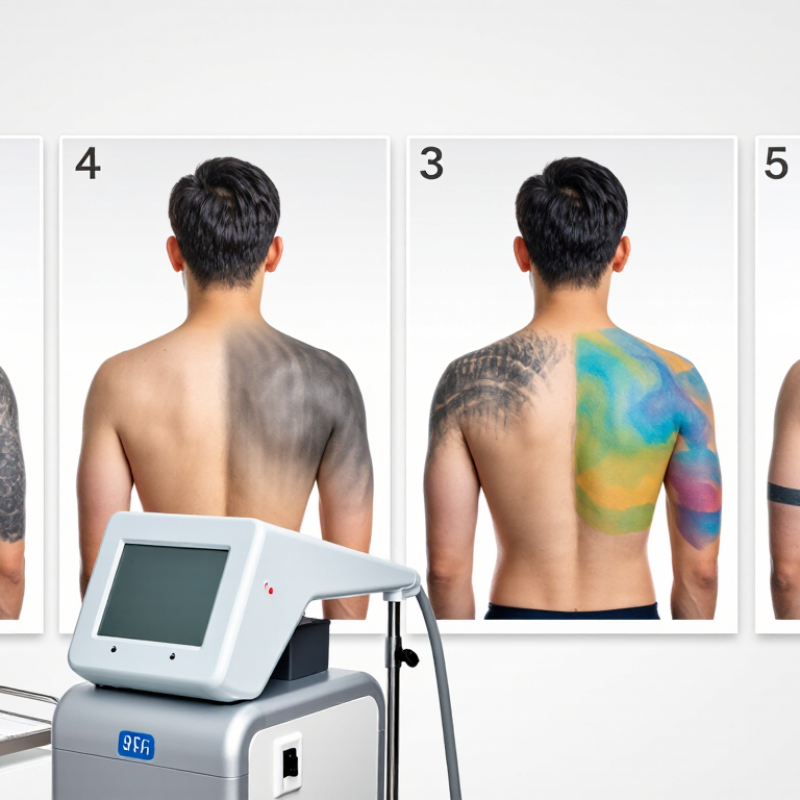
How Many Sessions for Full Tattoo Removal?

Factors That Determine the Number of Tattoo Removal Sessions

How Many Sessions for Full Tattoo Removal?

The number of tattoo removal sessions depends on more than ink color. A peer-reviewed study introducing the Kirby-Desai scale reported an average of 10.2 sessions among treated patients. Some tattoos required fewer treatments, while others needed up to 20.

Ink density matters.

Black ink often responds more predictably because it absorbs a broad range of laser energy. Turquoise, green, yellow, and fluorescent pigments can be more resistant. The tattoo’s age, layering, depth, and location also influence progress.

A dense cover-up on the ankle may need more sessions than a small, faded design on the upper arm. Skin tone affects treatment settings and safety, too. Experienced clinicians may use lower energy and longer intervals for deeper skin tones, reducing the risk of pigment changes.

Healing time is part of the calculation. Clinical guidance from the American Academy of Dermatology commonly recommends waiting at least six to eight weeks between treatments. The body needs time to clear fragmented pigment. Removing ink is slow biology, not instant erasure. The U.S. Food and Drug Administration also states that complete removal cannot be guaranteed. That point is easy to overlook. In practice, many patients need six to twelve sessions, but this remains an estimate. A careful assessment should consider the Fitzpatrick skin type, tattoo photographs, pigment colors, scar tissue, and previous treatment history before promising a timeline.

How Laser Tattoo Removal Works Across Multiple Treatment Stages

How Many Sessions for Full Tattoo Removal?

Laser tattoo removal happens in stages, not during one dramatic appointment. Laser energy breaks tattoo pigment into smaller particles beneath the skin. Your immune system gradually removes those particles afterward. That process takes time. Most people need several sessions, often spaced six to ten weeks apart. The exact number depends on ink color, pigment depth, tattoo size, skin tone, location, and the tattoo’s age.

During early treatments, darker pigments may fade first, while green, blue, or pale shades can respond more slowly. A practitioner should assess your skin and tattoo before choosing laser settings. They may begin conservatively, then adjust energy levels as the skin heals. Redness, swelling, tenderness, or temporary lightening can occur after treatment. Careful aftercare helps reduce avoidable irritation, especially when the area meets sunlight or friction.

The estimate is useful, but it can be wrong. Some tattoos fade quickly, while others leave stubborn shadows after many sessions. Amateur tattoos may respond differently from professionally applied ink because pigment depth varies. I have found that patient expectations need regular review, not a fixed promise. A qualified medical professional should examine unusual reactions, delayed healing, or changes in skin texture. Better progress often comes from allowing enough recovery time, rather than treating too aggressively.

Typical Session Ranges for Different Tattoo Types

How Many Sessions for Full Tattoo Removal?

Typical Session Ranges for Different Tattoo Types

Tattoo removal rarely happens in one appointment. A peer-reviewed study in Dermatologic Surgery reviewed 100 patients and reported an average of about 10 laser sessions. Its Kirby-Desai scale estimated treatment needs using tattoo size, location, color, skin type, and tissue changes. The range was wide, from three to twenty sessions. These figures are useful, but they are not promises.

Small amateur tattoos often need 3–6 sessions, especially when they contain black ink and sit near the upper body. Professional black tattoos commonly require 6–10 sessions because their pigment is deeper and denser. Multicolored designs may need 8–15 sessions. Green, blue, yellow, and red pigments can respond unevenly. White ink deserves caution. It may darken temporarily after laser exposure, according to clinical guidance from the American Society for Laser Medicine and Surgery.

Large, saturated tattoos can exceed 12 sessions. Cover-ups often take longer because several pigment layers absorb the laser energy.

Treatments usually require at least six to eight weeks of healing between visits, as advised by the U.S. Food and Drug Administration. In practice, fading may look patchy first. That can feel disappointing. It does not always mean the treatment failed. Skin tone, immune response, ink chemistry, and aftercare all influence progress. Some estimates remain imperfect, and a careful clinician should revise the plan after every session.

What Happens Between Tattoo Removal Appointments

How Many Sessions for Full Tattoo Removal?

Between tattoo removal appointments, your skin is doing much of the work. Laser energy breaks ink into smaller particles, then the body gradually clears them through immune and lymphatic processes. The area may look darker before it fades. Mild redness, swelling, or crusting can also appear during healing.

Clinical timing matters. The U.S. Food and Drug Administration advises waiting about six to eight weeks between treatments. Some areas need longer. Treating too soon can increase irritation without improving results. The Kirby-Desai study, published in the Journal of Clinical and Aesthetic Dermatology, reported an average of about ten sessions, with results ranging from three to twenty. Ink color, density, skin type, scarring, and body location all affect the timeline. Dark ink often responds more predictably than lighter shades. This is not perfectly predictable.

Tips: Keep the area clean and protected from direct sunlight. Do not pick peeling skin or blisters. Photograph the tattoo under similar lighting before each appointment. Fading can be subtle, especially after the first treatment. A clinician should assess healing before repeating the procedure, rather than following a rigid calendar. Expect uneven progress. Some sections may clear quickly, while dense outlines remain visible for months.

How Many Sessions for Full Tattoo Removal? - What Happens Between Tattoo Removal Appointments

Typical Stage Approximate Timing What Happens During the Appointment What Happens Between Appointments Expected Tattoo Changes Important Care Considerations
Consultation and Patch Test Before treatment begins The tattoo is assessed for ink color, size, density, location, age, and skin type. A small test area may be treated when clinically appropriate. The skin is observed for sensitivity, unusual irritation, or delayed healing before a larger treatment area is considered. There may be little or no visible fading at this stage because only a limited area may have been treated. Share information about medications, health conditions, recent tanning, skin treatments, and any history of unusual scarring.
Session 1 Starting treatment Laser energy is delivered to the tattoo to break pigment into smaller particles. The area may feel warm, sharp, or similar to a series of quick snaps. Redness, swelling, tenderness, or small blisters can occur. The treated skin begins its normal healing response. The tattoo may look temporarily darker, lighter, swollen, or frosted immediately after treatment. Follow the provider’s wound-care instructions, keep the area clean, avoid picking, and protect healing skin from sunlight.
Session 2 Usually after about 6–10 weeks The area is checked for healing before treatment parameters are adjusted according to the tattoo and skin response. The body continues to clear fragmented pigment through natural biological processes. Fading is gradual rather than immediate. Early fading may be visible, especially in some black or dark-blue areas, while dense sections may remain prominent. Do not treat actively irritated, sunburned, or recently tanned skin. Use broad-spectrum sun protection once the area has healed.
Sessions 3–4 Often spaced 6–12 weeks apart Further treatments target remaining pigment. The provider may vary settings for different colors, depths, or concentrations of ink. Temporary redness or swelling may return after each appointment, followed by another period of healing and pigment clearance. The tattoo usually becomes less saturated, although some colors and heavily layered areas may fade more slowly. Avoid friction, abrasive products, swimming, and strenuous activity when advised during the early healing period.
Sessions 5–6 Commonly several months into treatment Treatment focuses on residual ink and areas that have responded unevenly. Progress is reviewed before each appointment. Longer intervals may be recommended if the skin needs additional recovery or if fading is still occurring between visits. Many tattoos show substantial lightening, but outlines, saturated sections, white ink, and certain bright colors may persist. Continue sun protection and avoid attempting to speed up removal by scratching, exfoliating aggressively, or applying unapproved products.
Sessions 7–10+ Individualized; often 8–12 weeks apart Additional sessions may be used for stubborn or deeply deposited pigment when the skin is healthy and the expected benefit remains reasonable. The skin may look nearly clear while small areas of pigment continue to fade slowly over several weeks or months. Complete removal cannot be guaranteed. Residual shading, ghosting, texture changes, or small areas of pigment may remain. A qualified medical professional should reassess persistent color, scarring, pigment changes, or any delayed healing before continuing.
Aftercare and Long-Term Review After the final planned session The treated area is reviewed after healing. Further treatment is considered only if the skin has recovered and additional fading is likely. Fading may continue after the last appointment. The final appearance can take time to stabilize. The outcome depends on ink composition, tattoo age, depth, color, location, immune response, and treatment consistency. Seek professional advice for increasing pain, spreading redness, pus, fever, significant blistering, or other signs of infection.
General guidance: Many professional estimates place complete tattoo removal within approximately 6–12 or more sessions, but there is no fixed number for every tattoo. The safest interval is determined by skin healing and clinical assessment rather than by rushing to the next appointment.

Signs That a Tattoo Is Ready for Its Next Treatment

How Many Sessions for Full Tattoo Removal?

Signs That a Tattoo Is Ready for Its Next Treatment

Tattoo removal rarely follows a fixed session count. Ink color, pigment depth, tattoo age, and skin response all affect the timeline. Many treatments require several sessions, often spaced six to eight weeks apart. The interval matters because the body needs time to clear fragmented pigment.

A tattoo may be ready when the treated skin looks and feels normal. Redness, swelling, tenderness, blistering, or crusting should have fully settled. The area should not feel unusually warm or painful. Fading is another useful sign. Look for lighter sections, softened edges, or small gaps in the design. Take photographs in the same lighting. Progress can be surprisingly difficult to judge from memory.

Still, fading alone does not confirm readiness. A tattoo can appear lighter while deeper skin irritation remains. A qualified practitioner should examine the area before each treatment. They may check texture, pigment changes, scarring, and your healing history. Darker skin tones also need careful assessment because temporary lightening or darkening can occur. Waiting longer is sometimes the safer choice. Impatience can lead to avoidable skin complications. Even experienced providers may adjust the plan when healing is slower than expected. Skin does not always follow a neat schedule.

FAQS

How many sessions are usually needed for full tattoo removal?

Many people need six to twelve sessions. Some tattoos require only three, while others may need twenty.

Why does tattoo removal require several appointments?

Laser energy breaks pigment into smaller particles. Your immune system clears them gradually afterward. It takes time.

How long should I wait between sessions?

Most treatments are spaced six to ten weeks apart. The skin needs healing time, and the body needs time to remove pigment.

Which tattoo colors are usually easier to remove?

Black ink often responds more predictably. Green, blue, yellow, turquoise, and fluorescent colors may fade more slowly.

Do professional and amateur tattoos need different treatment plans?

Small amateur tattoos may need three to six sessions. Professional tattoos often contain deeper, denser pigment and may need more treatments.

Can a large cover-up tattoo take longer to remove?

Yes. Cover-ups contain multiple pigment layers. A large, saturated design may exceed twelve sessions and fade unevenly.

Does skin tone affect tattoo removal?

Yes. Skin tone influences laser settings and safety. Conservative energy levels may reduce the risk of unwanted pigment changes.

What happens after each laser session?

Redness, swelling, tenderness, or temporary lightening may occur. Protect the area from sunlight and avoid unnecessary friction.

Can a clinician guarantee complete tattoo removal?

No. Complete removal cannot be guaranteed. Some tattoos leave faint shadows, especially after many sessions.

How accurate is the estimated number of sessions?

Estimates can be wrong. Ink chemistry, depth, age, scarring, location, immune response, and aftercare may change the treatment plan.

Conclusion

The answer to “how many sessions for full tattoo removal” varies from person to person. Factors such as tattoo size, ink colors, depth, age, location, skin type, and the body’s natural healing response all affect the timeline. Darker inks may fade more predictably, while bright or layered colors can require additional treatment. Professional assessment is essential for creating a realistic plan.

Laser tattoo removal works gradually by breaking ink into smaller particles that the body clears between appointments. Treatments are typically spaced several weeks apart to allow the skin to recover and the immune system to remove fragmented pigment. During this period, the tattoo may continue fading, and temporary redness, sensitivity, or mild swelling can occur. A tattoo is generally ready for its next session once the skin has fully healed and visible irritation has subsided. Consistent aftercare and patience are important, as complete removal may require multiple treatment stages rather than a single appointment.

Isabella

Isabella

Isabella is a dedicated marketing professional with a sharp focus on driving brand growth and engagement through strategic content creation. With an extensive background in digital marketing, she combines her passion for storytelling with her keen understanding of industry trends to deliver......